By Bavoriat Clara
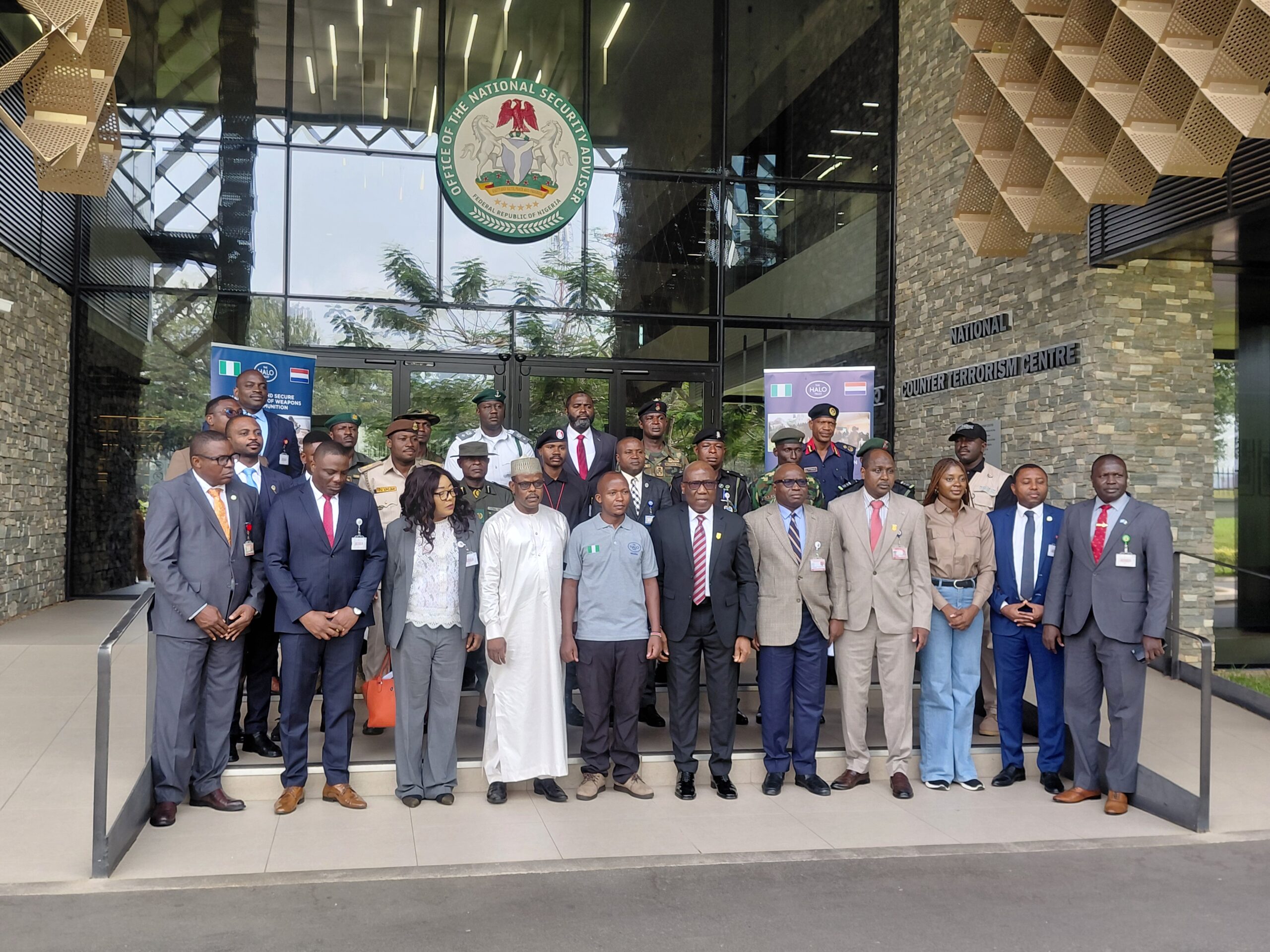
The National Centre for the Control of Small Arms and Light Weapons (NCCSALW) has inaugurated a comprehensive capacity development programme on Arms Physical Security and Stockpile Management (PSSM) for arms-bearing security agencies, in a renewed effort to curb the proliferation of illicit weapons and strengthen national security.
The Director General of NCCSALW, retired Deputy Inspector General of PoliceJohnson Kokumo, described Nigeria’s current security landscape as a complex and interconnected crisis driven largely by the widespread availability of small arms and light weapons.
He noted that insecurity across the country including insurgency in the North-East, banditry in the North-West, communal clashes in the North-Central, separatist agitations in the South-East, militancy in the South-South, and rising kidnapping incidents in the South-West—has been exacerbated by the uncontrolled circulation of weapons.
Kokumo acknowledged that a significant number of weapons in the hands of criminal elements were diverted from legitimate state stockpiles due to lapses in armoury management, weak accountability systems, and inadequate training of personnel. He stressed that the programme represents a strategic intervention aimed at addressing these internal gaps by strengthening institutional capacity for the safe storage, proper documentation, and effective management of arms and ammunition within official custody.
He further explain that NCCSALW, established in line with the ECOWAS Convention on Small Arms and Light Weapons and reinforced by the Control of Small Arms and Light Weapons Act 2024, has made notable progress in combating arms proliferation.
According to him, the Centre has recovered and destroyed over 16,000 illicit, decommissioned, and unserviceable weapons, while also enhancing intelligence sharing and operational collaboration among security agencies. He emphasized, however, that enforcement alone is insufficient, noting that sustainable progress must also come from strengthening internal systems within security institutions.
The programme is being implemented in collaboration with the HALO Trust, a globally recognised humanitarian organisation specialising in weapons management and mine clearance.
The Operations Manager of HALO Trust, Jacob Nyaga, stated that the initiative, funded by the Kingdom of the Netherlands, is designed to equip participants with both technical and managerial competencies required for effective stockpile management.
He explained that the training will be conducted in three phases, beginning with an armoury storekeepers’ course, followed by an armoury managers’ course, and concluding with a “train-the-trainer” phase aimed at building sustainable in-house training capacity within security agencies.
Also speaking, the Project Officer of HALO Trust Nigeria, Susan Oziegbe, highlighted the organisation’s global experience and local impact in weapons and ammunition management. She disclosed that since commencing operations in Nigeria in 2022, the organisation has trained over 260 security personnel and conducted technical assessments across 19 states.
Oziegbe further revealed that an estimated six million illicit weapons remain in circulation in Nigeria, contributing significantly to violent crimes and insecurity.
She explained that the training programme is designed to align Nigeria’s arms management practices with international standards, focusing on proper handling, secure storage, inventory control, risk management, and accountability.
The expected outcomes, she noted, include improved safety and accountability of armouries, reduced risk of weapons diversion, enhanced national and community security, and the development of sustainable internal training frameworks within security institutions.
The Director General charged participants to approach the training with a high sense of responsibility, emphasizing that the integrity of Nigeria’s national arsenal ultimately depends on the professionalism and accountability of personnel entrusted with weapons. He expressed confidence that the programme would significantly reduce the flow of illicit arms and strengthen the country’s security architecture.
The ceremony concluded with the formal inauguration of the Armoury Storekeepers Course, marking the commencement of the multi-phase training programme aimed at reinforcing arms control and accountability across Nigeria’s security agencies.
 admin
admin