By Ruth Dabo
In conflict environments where individuals may be victims of coercion, abduction, or prolonged exposure to extremist influence, delayed judicial processes and prolonged detention can deepen vulnerability and social stigma. In Nigeria, many such individuals pass through a legal system burdened by complex and numerous cases, often resulting in extended trial periods. Consequently, even after being discharged or acquitted, they are not immediately released to reintegrate freely into society. This is because their exposure to extremist settings whether voluntary or involuntary requires structured reorientation.
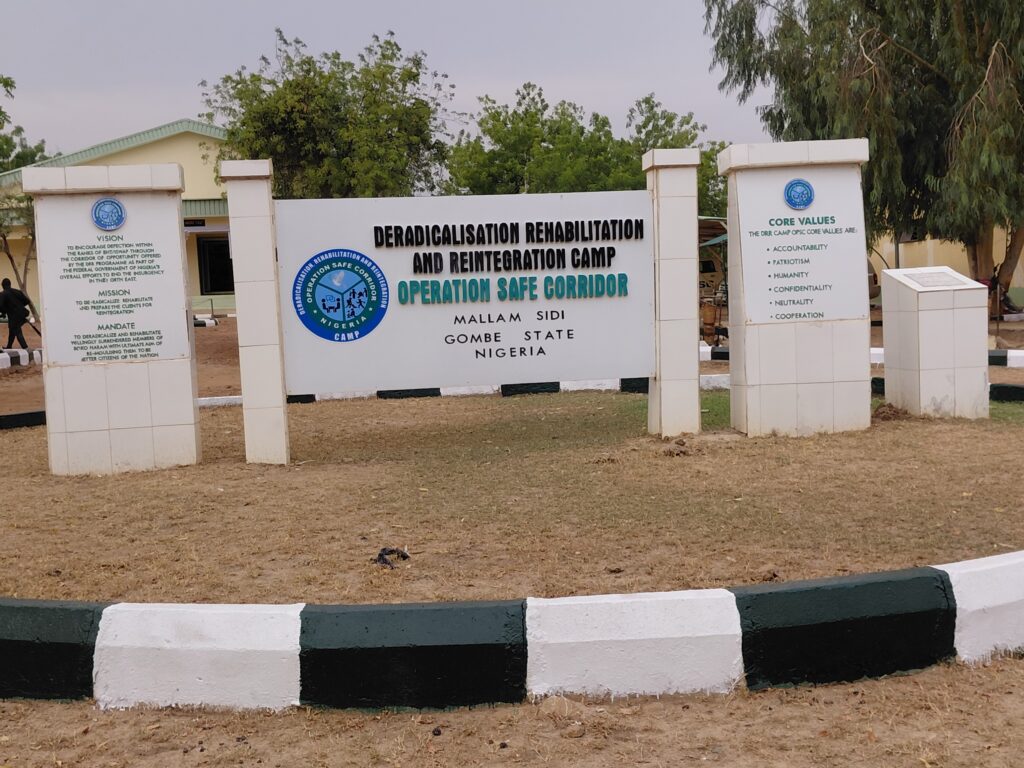
It is within this context that Operation Safe Corridor was established, to bridge the gap between acquittal and reintegration by addressing stigma, reshaping behaviour, and equipping clients with the tools needed to live responsibly within their communities.
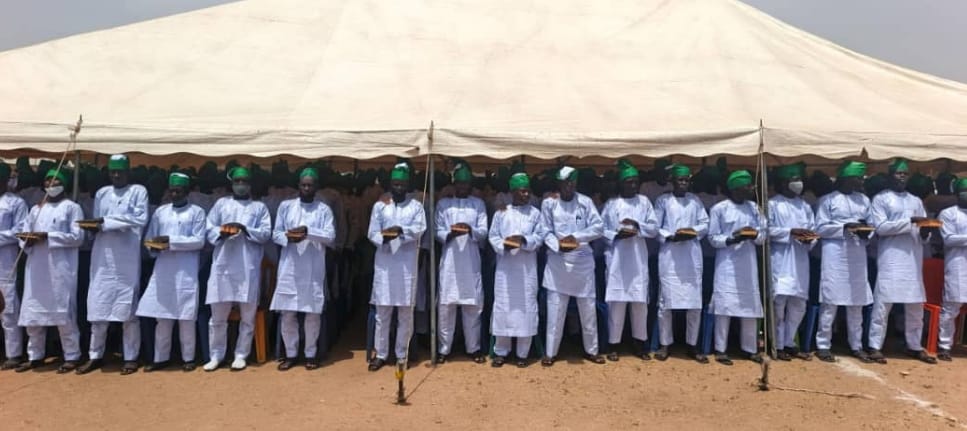
At the graduation of 744 clients at of Special Batches 7/2024, 8/2025 and Classified Batch 1/2025, from the De-radicalisation, Rehabilitation and Reintegration (DRR) Camp in Mallam Sidi, Gombe State, the Chief of Defence Staff, General Olufemi Oluyede, reiterated that the programme is a strategic, non-kinetic complement to ongoing military operations.
Represented by Rear Admiral Kabir Tenimu, the CDS clarified that the Armed Forces of Nigeria are not responsible for the arrest or prosecution of most clients in the programme. Rather, individuals are processed through the appropriate legal and intelligence channels, assessed as low-risk, and in many cases cleared or acquitted by the Federal Ministry of Justice before being transferred to Operation Safe Corridor for rehabilitation.
The CDS emphasized that the initiative is neither an amnesty programme nor a reward system, but a deliberate national security strategy aimed at reducing recidivism and weakening the ideological foundations of violent extremism. He noted that many of the clients are victims who had been manipulated or forced into insurgent activities, and as such, require structured intervention to rebuild their lives.
“Lasting peace,” he stated, “demands that we go beyond kinetic operations to address the human factors that sustain conflict.”
Also speaking, the Coordinator of Operation Safe Corridor, Brigadier General Yusuf Ali, highlighted misinformation as a major challenge confronting the programme. He cautioned that inaccurate narratives, particularly those suggesting that rehabilitated individuals are recruited into the military are false and misleading. He reaffirmed that the Armed Forces maintain strict recruitment standards and that no graduate of the programme is enlisted into military service.
Providing operational insight, the Commandant of the DRR Camp, Colonel Mohammed Bello, disclosed that the programme combines medical care, psychological support, religious reorientation, and vocational training to prepare clients for reintegration. Participants are profiled, documented, and issued national identity credentials, while also receiving skills training in trades such as tailoring, welding, agriculture, and carpentry to promote self-reliance.
He further revealed that the clients represent a broad demographic spread across Nigeria and neighbouring countries, underscoring the transnational dimension of the insurgency. A breakdown shows that the majority are from the North-East, with 477 clients from Borno State, while others include 58 from Yobe, 15 from Kano, 12 from Bauchi, 10 from Adamawa, 7 from Kaduna, 6 each from Gombe and Jigawa, 5 from Kogi, 4 from Nasarawa, and smaller numbers from Abia (2), Anambra (2), Niger (2), Plateau (2), Sokoto (2), Ebonyi (3), Katsina (3), Akwa Ibom (1), Enugu (1), and Kebbi (1). Additionally, the programme recorded foreign participants, including 4 from Niger Republic, 2 from Chad, and 1 each from Cameroon and Burkina Faso. This diverse composition highlights the complexity of the challenge and the need for coordinated reintegration efforts across communities and borders.
The programme is further strengthened through the support of key international and local partners. These include the International Organization for Migration, the European Union, the Foreign, Commonwealth and Development Office, the Centre for Democracy and Development, the International Committee of the Red Cross, and the Embassy of Switzerland in Nigeria, among others. Their contributions span technical assistance, funding, capacity building, and humanitarian support, significantly enhancing the effectiveness and sustainability of the rehabilitation and reintegration process.
Colonel Bello further explained that the rehabilitation process includes counselling sessions led by both Islamic and Christian clerics to counter extremist narratives, alongside interventions addressing trauma, substance abuse, and behavioural challenges. He confirmed that the clients demonstrated significant progress throughout the programme and were assessed to be stable and ready for reintegration. As part of the graduation process, they voluntarily swore an Oath of Allegiance to the Federal Republic of Nigeria, renouncing all ties to insurgent groups.
The Defence Headquarters also underscored the importance of community involvement in sustaining the success of the programme. State governments, traditional rulers, and community leaders have been actively engaged to facilitate acceptance and reduce stigma against returning individuals.
The commissioning of a De-radicalisation Studio at the camp further reflects an evolving approach to rehabilitation, enabling continuous engagement through digital platforms beyond the physical confines of the camp.
Operation Safe Corridor, the military maintains, represents a balanced approach to national security, one that recognises that while force is necessary in combating insurgency, sustainable peace is achieved through rehabilitation, reintegration, and the restoration of human dignity.
 admin
admin