BY RUTH DABO
For years, the North Central region of Nigeria has stood at the crossroads of security challenges that threatened both lives and livelihoods. Banditry, kidnapping, communal violence and criminal activities turned once-thriving agrarian communities across Benue, Nasarawa and Taraba States into flashpoints of fear and displacement. Farmlands were abandoned, economic activities stalled, and thousands of residents were forced into camps for internally displaced persons.
It was against this backdrop of persistent insecurity that the Nigerian military intensified operations under the Joint Task Force, Operation Whirl Stroke (OPWS), to restore stability and public confidence in the region.
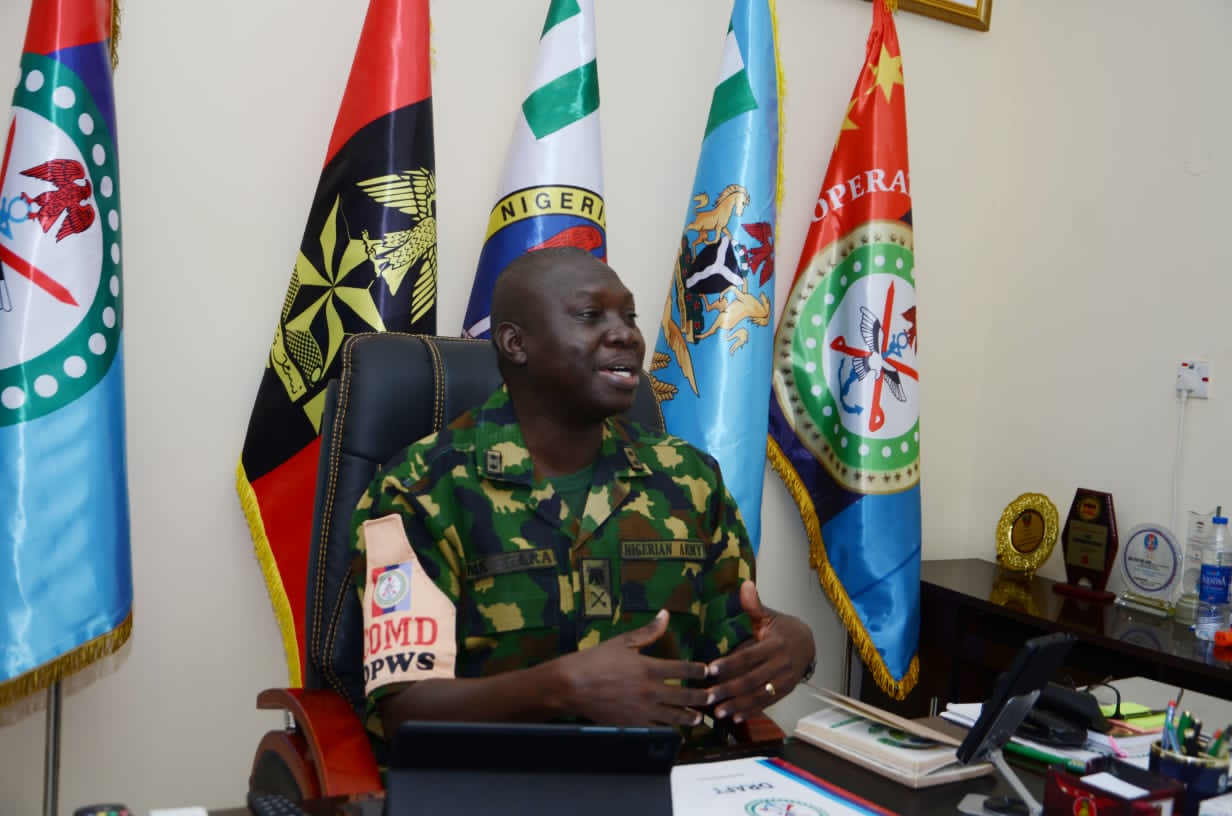
Recent disclosures by the military suggest that those efforts are beginning to yield measurable results. The Force Commander, Operation Whirl Stroke, Major General Moses Gara, revealed that the operation conducted over 1,900 military operations within the last one year alone, marking one of the most sustained security offensives in the region’s recent history.
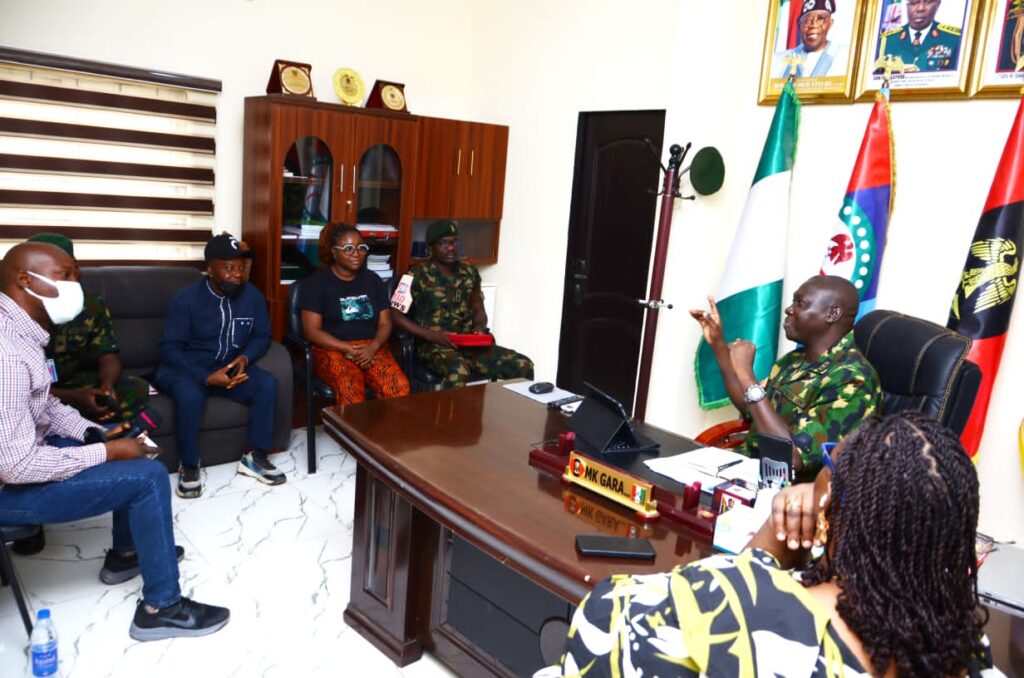
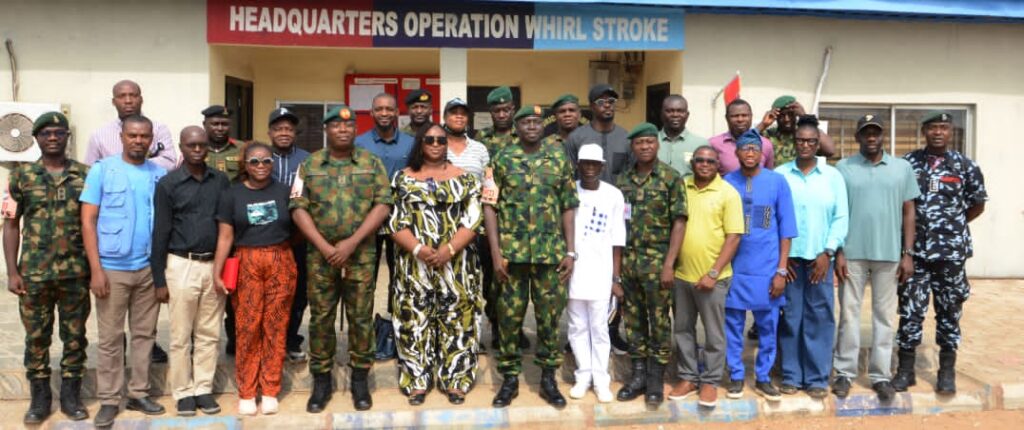
The disclosure was made during a media engagement held as part of an on-the-spot operational assessment by the Chief of Defence Staff, General Olufemi Oluyede, underscoring the strategic importance attached to the operation.
According to Major General Gara, Operation Whirl Stroke was established to provide military aid to civil authorities in line with constitutional provisions, and not to replace the police or other law enforcement agencies. Rather, it was designed to complement existing security structures by providing robust military support in areas where criminal groups had overwhelmed civil authority. He noted that persistent troop deployments, especially in notorious flashpoints such as Guma Local Government Area of Benue State, have significantly restricted the freedom of movement of armed groups and dismantled criminal enclaves.
Operational outcomes from January 2025 to date reflect the scale of engagement. Troops of Operation Whirl Stroke have rescued 657 kidnapped victims and neutralised 124 bandits, armed herders and other criminal elements. In addition, 38 suspected gunrunners were arrested, several illegal gun-fabricating workshops dismantled, and 98 assorted weapons alongside more than 6,300 rounds of ammunition recovered. These recoveries, military officials say, have disrupted supply chains that sustained criminal activities across the region.
Beyond arms and arrests, the operation has also addressed long-standing drivers of communal tension. The recovery of 2,465 rustled cows and their return to rightful owners has helped de-escalate conflicts between farming and pastoral communities. In a notable cross-border security success, troops also rescued an Israeli national working with SCC Nigeria Limited, who was abducted along the Kufai–Ahmadu–Wukari road in Takum Local Government Area of Taraba State. Illicit drugs suspected to be cannabis sativa were also seized during operations, highlighting the nexus between drug trafficking and violent crime.
Perhaps the most telling indicator of progress lies in the humanitarian impact of improved security. Major General Gara disclosed that more than 60,000 internally displaced persons have returned to their ancestral homes and farmlands, particularly in Benue State.
As part of civil-military cooperation initiatives aimed at post-conflict recovery, Operation Whirl Stroke distributed 2,800 bags of 50-kilogram fertiliser to farmers, a move designed to restore agricultural productivity and strengthen trust between troops and local communities.
However, the military leadership has been careful not to present the gains as absolute. The Force Commander identified deep-rooted mistrust, harmful narratives and the proliferation of illegal community armouries as major obstacles to lasting peace. He warned that misinformation and self-arming by communities have fuelled cycles of violence, discouraged intelligence sharing and undermined security efforts, stressing that military force alone cannot permanently resolve the crisis without community cooperation.
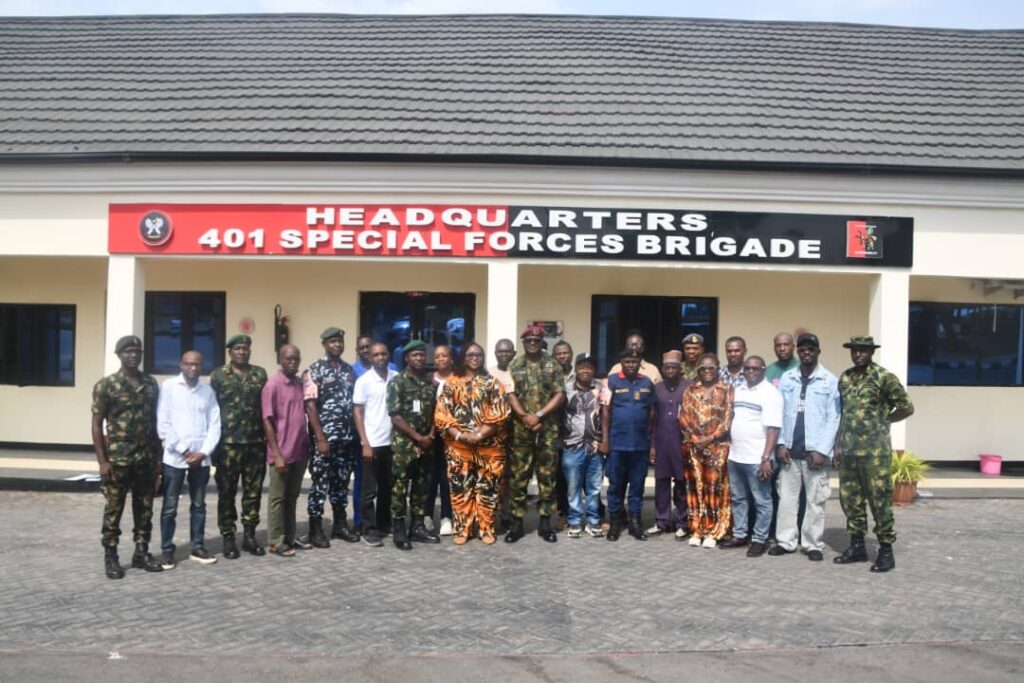
Concerns over human rights and troop conduct have also surfaced in public discourse. Addressing these issues, the Commander of the 401 Special Forces Brigade and Sector 1 OPWS, Brigadier General Kolawole Oyebanji Bukoye, dismissed allegations of troop brutality, insisting that all operations are conducted professionally and in strict adherence to the rules of engagement and due process. He explained that suspects are properly investigated and either released or handed over to relevant authorities for prosecution, assuring residents that areas such as Yelwata and its environs are now significantly safer.
At the tactical level, commanders on the ground report tangible improvements. Lieutenant Colonel Donatus Otobo, Commanding Officer of the Chief of Army Staff Intervention Battalion, said sustained operations in Guma Local Government Area have transformed what was once a major hotspot of violent attacks. Through aggressive day and night patrols, ambushes and community engagement, his battalion has achieved about 80 per cent security within its area of responsibility, reducing attacks from near-weekly occurrences to stretches of several months without incidents.
Further gains have been recorded in Nasarawa State, where the Commander of Sector 2 OPWS, Brigadier General David Nwakanobi, disclosed the recovery of AK-47 rifles, Beretta pistols, revolver guns, Dane guns, locally fabricated weapons and large quantities of ammunition. He also confirmed the arrest of three high-profile kidnapping kingpins and the neutralisation of two notorious kidnap leaders during operations in 2025. Joint operations with the Nigerian Air Force, he added, are being intensified to block cross-border movement of bandits between Nasarawa and Benue States.
As Operation Whirl Stroke enters another phase of sustained engagement, military authorities insist that consolidating the gains will require a combination of kinetic operations, intelligence-driven policing, civil-military cooperation and community trust-building. While challenges remain, the scale of operations, humanitarian outcomes and gradual return of displaced populations suggest that the tide may be turning in Nigeria’s North Central region.
For communities long trapped between fear and displacement, the success or failure of Operation Whirl Stroke may ultimately be measured not only by statistics, but by how enduring the peace becomes and whether daily life can fully return to normal.
 admin
admin