By Bavoriat Clara
The National Security Adviser, Mallam Nuhu Ribadu, and the National Peace Committee (NPC) have warned that the persistent violence in Northern Nigeria is being driven by a deepening breakdown of trust between citizens, communities, and the state—calling for urgent, coordinated action to restore stability across the region.
Speaking at a high-level dialogue on preventing violence, Ribadu said security agencies have intensified intelligence-led operations and deradicalisation programmes, securing over 775 terrorism convictions and facilitating the surrender of thousands of insurgents. He cautioned, however, that military successes alone cannot guarantee lasting peace, insisting that “security is everybody’s business” and must be anchored on stronger community engagement and cooperation.
NPC Convener, Bishop Matthew Hassan Kukah, said the crisis in the North is shaped by a complex mix of poverty, exclusion, environmental stress, and ideological manipulation—challenges that cannot be solved by force alone. He warned that the greatest threat to peace is the erosion of trust between government and the governed, stressing that rebuilding confidence is essential. “Peace cannot be outsourced,” he said. “It must be built from the ground up.”
In his remarks, the Sultan of Sokoto, His Eminence Muhammad Sa’ad Abubakar III, urged leaders at all levels to approach the security crisis with sincerity and honesty. He dismissed narratives portraying insecurity as a religious conflict, emphasizing that tensions occur between individuals—not faiths. “Our diversity is an asset, not a problem,” he said.
The dialogue, supported by the European Union Delegation to Nigeria and ECOWAS, centred on strengthening early warning systems, enhancing community resilience, and advancing a whole-of-society response to insecurity in Northern Nigeria.
At the event, the Chief of Defence Staff (CDS), General Olufemi Oluyede, reiterated the military’s commitment to a people-centred, collaborative, and preventive security model. Represented due to national security duties, the CDS said Nigeria’s stability depends on joint action by security agencies, traditional institutions, communities, civil society, and international partners.
He praised the NPC for consistently promoting peaceful coexistence and democratic stability, noting that the Armed Forces have expanded civil-military cooperation, reinforced civilian protection, and strengthened community engagement structures. According to him, future military operations will prioritise inter-agency synergy and deeper partnerships with traditional rulers, youth and women groups, religious bodies, the private sector, and development organisations.
European Union Ambassador to Nigeria, Ambassador Gautier Mignot, also expressed concern over rising violent attacks, kidnappings, and extremist activities across the North. He said insecurity is driven by terrorism, banditry, opportunistic crime, gender-based violence, and climate-linked conflicts. While reaffirming the EU’s solidarity with victims, he stressed that the response must be “Nigerian-led but supported by international partners.” He disclosed that the forthcoming EU–Nigeria Peace, Security and Defence Dialogue will strengthen cooperation on both kinetic and non-kinetic interventions.
The Director-General of the Nigeria Governors’ Forum (NGF), Dr. Abdullatif Shittu, warned that insecurity has transformed from localized crime to entrenched, organized networks fuelled by economic exclusion, arms proliferation, community grievances, and weak governance systems. He said insurgency in the Northeast and worsening farmer-herder clashes in the North Central require coordinated, state-level reforms.
Shittu announced that the NGF has established a Department of Peace and Inclusive Security and deployed conflict-management experts to support the implementation of recommendations emerging from the dialogue. Stabilising Northern Nigeria, he said, is essential to safeguarding national unity and development.
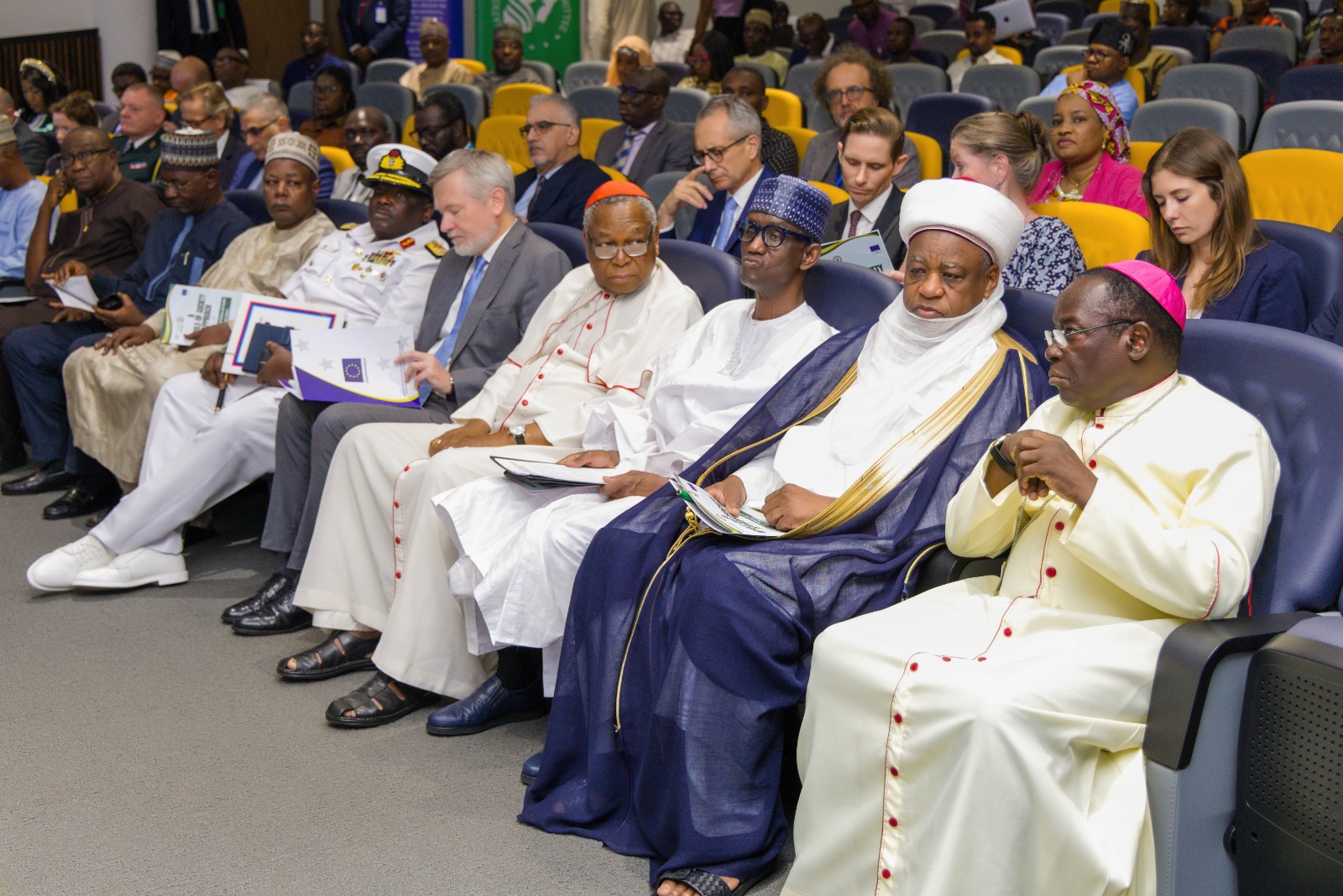
The high-level gathering—which drew the National Security Adviser, senior military officials, traditional rulers, diplomats, religious leaders, civil society groups, and development partners—aimed to generate actionable strategies to address the root causes of violence and strengthen peacebuilding efforts across Northern Nigeria.
 admin
admin