By Bavoriat Clara
The National Counterterrorism Center (NCTC) has reaffirmed the Federal Government’s commitment to a strong partnership with the media, while stressing the need for responsible reporting on sensitive security matters, as Nigeria intensifies efforts to combat terrorism and violent crime.
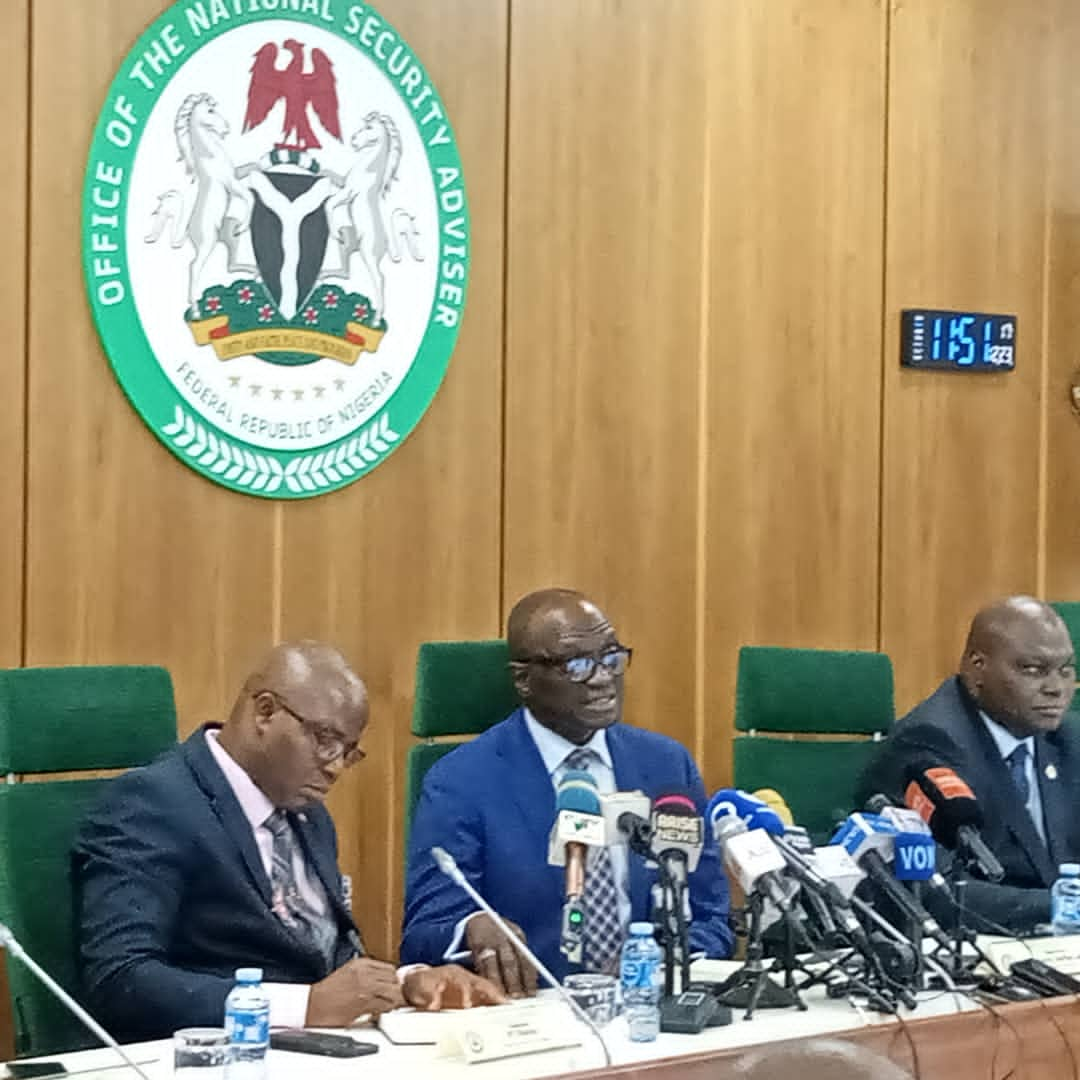
Speaking at an end-of-year media parley on behalf of the National Security Adviser, Malam Nuhu Ribadu, the NCTC National Coordinator, Major General Adamu Laka, said one of the most significant developments in Nigeria’s security policy is the President’s formal designation of bandits, armed non-state actors and criminal gangs as terrorists.
Major General Laka explained that the decision represents a deliberate legal and policy shift aimed at strengthening Nigeria’s counterterrorism architecture and enabling a more coordinated, intelligence-driven and forceful national response to evolving security threats. He noted that the designation allows security agencies to deploy counterterrorism tools against groups whose activities now mirror classic terrorism.According to him, the classification is anchored on an existing Federal High Court order of November 25, 2021, which was gazetted under the Terrorism Prevention and Prohibition framework, recognizing bandit groups as terrorist organizations.
The NCTC National Coordinator said the activities of bandits and criminal gangs — including mass kidnappings, coordinated attacks on villages, killings, extortion, arms trafficking and the seizure of territories — are no longer acts of ordinary crime but deliberate attempts to instill fear, undermine state authority and destabilize communities.
He stressed that repeated abductions of schoolchildren, attacks on rural settlements and the destruction of livelihoods are designed to terrorize populations, force displacement, shut down schools and farmlands, and extract concessions, adding that such acts directly challenge the state’s monopoly on the use of force.
Major General Laka further disclosed that intelligence assessments have revealed increasing operational links between bandit groups and insurgent networks, including the sharing of weapons, tactics and logistical support, making a unified counterterrorism response imperative.
Placing Nigeria’s security challenges within a regional context, he warned that instability in the West African sub-region and the Sahel continues to fuel terrorism and transnational crime. He noted that terrorist groups exploit porous borders and political instability in neighbouring countries, adding that Nigeria, as the region’s largest economy, remains a major target for criminal and terrorist financing.
On terrorism financing, the National Coordinator said security agencies have recorded significant successes in tracking ransom payments linked to kidnappings, leading to arrests, prosecutions, recoveries and asset seizures. He explained that these efforts are largely intelligence-led and sensitive, and therefore not all operational details can be made public.
Major General Laka said Nigeria’s removal from the Financial Action Task Force (FATF) grey list was partly achieved through coordinated investigations under a Joint Investigation Committee established by the National Counterterrorism Strategy. The committee, he said, comprises the EFCC, NFIU, ICPC, the judiciary, the police and the military, and focuses on disrupting terrorism financing, including ransom payments.
He also acknowledged challenges associated with the misuse of Point-of-Sale (POS) operators and digital financial platforms by kidnappers and terrorists, noting that measures are being strengthened to monitor, regulate and disrupt such channels.
On the digital front, Major General Laka disclosed sustained engagement with major social media platforms, including TikTok, Facebook, Instagram, Snapchat and X, to dismantle accounts and content linked to terrorist propaganda, recruitment and criminal activities. He said several platforms previously used by bandits to display weapons and loot have been taken down, even as terrorist tactics continue to evolve online.
While commending the media for their professionalism, resilience and commitment to informing the public under challenging conditions, the National Coordinator cautioned against the premature release of sensitive operational details, warning that the uncontrolled disclosure of intelligence-led activities could compromise operations, endanger lives and aid criminal elements.
Major General Laka emphasized that national security and press freedom are not opposing forces but complementary pillars of democracy, calling for sound judgment in balancing public interest with security imperatives. He urged sustained dialogue, trust and responsible partnership between security agencies and the media to ensure a safe, secure and united Nigeria.
 admin
admin