By Bavoriat Clara
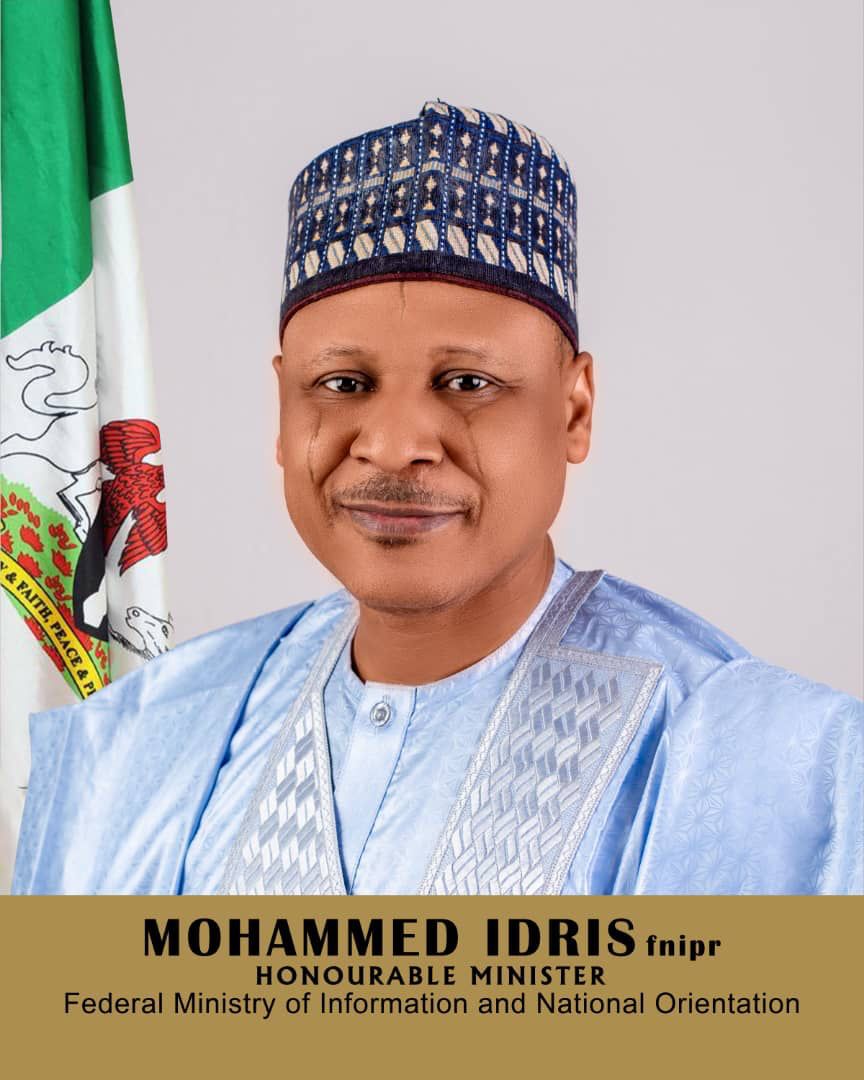
The Honourable Minister of Information and National Orientation, Mohammed Idris, says the economic reforms initiated by President Bola Ahmed Tinubu are beginning to stabilise Nigeria’s economy, rebuild investor confidence, and place the country on a sustainable path of growth after years of fiscal uncertainty.
Idris made the remarks during a virtual interview on ICAN On Air, a live programme of the Institute of Chartered Accountants of Nigeria (ICAN), streamed on Thursday. The comments were contained in a statement issued by his Special Assistant on Media, Rabiu Ibrahim.
According to the Minister, key policy decisions such as the removal of fuel subsidy and the unification of the foreign exchange rate were deliberately taken early in the administration to address deep-rooted structural weaknesses that posed serious risks to the nation’s economic survival.
He explained that by May 2023, the country’s financial situation had become unsustainable, with about 26 states unable to pay salaries and nearly 97 per cent of national revenue being used to service debts. Idris noted that the reforms, though difficult, were unavoidable if Nigeria was to avert economic collapse.
The Minister acknowledged that the policies initially triggered short-term economic shocks but stressed that they were necessary to correct long-standing distortions and ensure that national resources benefit the wider population rather than a privileged few. He added that the President took the decisions despite their political cost, convinced that delaying action would worsen the country’s economic trajectory.
Highlighting recent progress, Idris said current economic indicators point to gradual recovery, citing stronger foreign reserves, easing inflationary pressures, and renewed confidence from investors and international partners. He disclosed that Nigeria’s foreign reserves have risen to about 46 billion dollars, the highest level recorded in roughly eight years.
He also described Nigeria’s removal from the Financial Action Task Force (FATF) grey list as a major boost to the country’s global credibility, noting that it has improved access to international capital and strengthened confidence in Nigeria’s financial system.
On ongoing tax reforms, the Minister clarified that the government’s objective is not to impose additional burdens on citizens but to streamline the tax system, eliminate duplication, and ensure fairness by expanding the tax net. He said the reforms would enable better planning and more effective delivery of development programmes.
Idris emphasised that building public trust remains central to his mandate as Information Minister, stressing that transparent communication and active engagement with citizens are essential for sustainable development. He said President Tinubu consistently seeks feedback on policies and is prepared to adjust implementation strategies where necessary, while remaining resolute on reforms critical to long-term national progress.
Addressing the issue of misinformation, the Minister said the government is enhancing inter-agency cooperation and promoting media literacy to combat fake news without infringing on freedom of expression. He warned that unchecked misinformation poses a serious threat to national stability.
He further disclosed that Nigeria has secured the bid to host UNESCO’s first Category-2 Media and Information Literacy Institute, which will focus on equipping citizens, particularly young people, with skills to distinguish factual information from falsehoods.
The Minister urged Nigerians to remain patient and actively engaged as the reform process continues, assuring that the benefits will become increasingly evident across key sectors such as infrastructure, education, healthcare, and sub-national development. He maintained that the reforms are deliberate and disciplined efforts aimed at securing a more stable and prosperous future for the country.
 admin
admin