By Bavoriat Clara
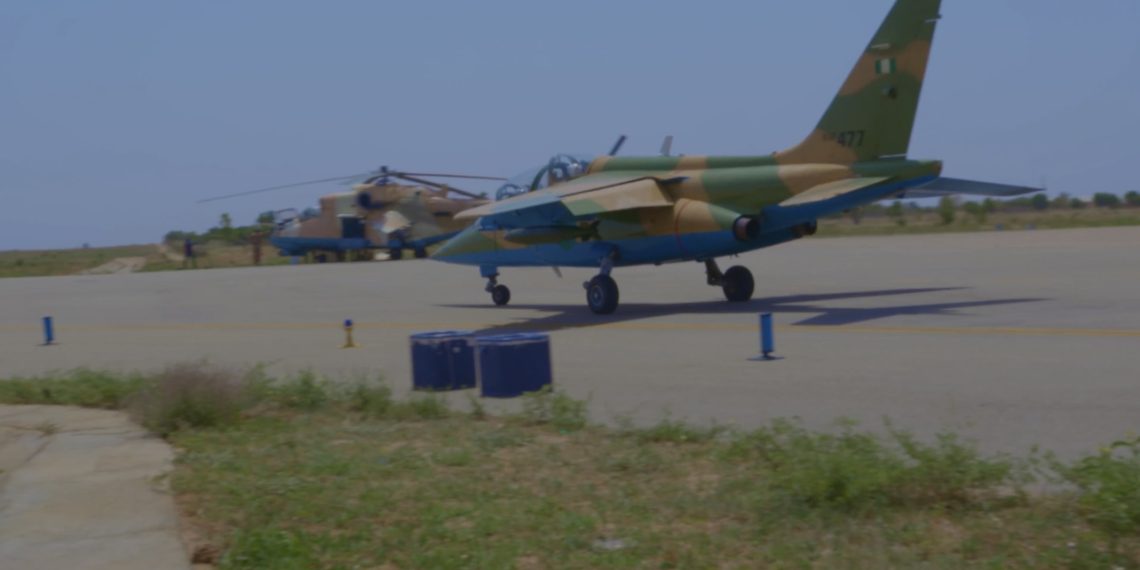
The Alpha Jet aircraft, inducted into the Nigerian Air Force (NAF) in the early 1980s, has remained one of the most enduring symbols of Nigeria’s air power capability, playing critical roles in training, combat operations, and regional peace enforcement for over four decades.
Originally developed in the 1970s through a Franco-German collaboration between Dassault Aviation of France and Dornier of Germany, the Alpha Jet was designed as a versatile platform for advanced pilot training and light-attack missions. Nigeria’s decision to acquire the aircraft marked a major milestone in the evolution of the NAF, ushering in the fast-jet era and significantly enhancing its operational reach and combat readiness.
Since its induction, the Alpha Jet has featured prominently in regional security operations. During the ECOMOG peace enforcement missions in Liberia and Sierra Leone, NAF Alpha Jets conducted decisive combat sorties, striking hostile positions, disrupting enemy logistics, and providing sustained close air support to ground forces. These operations reinforced Nigeria’s leadership role in regional security and demonstrated the effectiveness of its air power in stabilisation efforts across West Africa.
The aircraft’s operational relevance continued decades later. In 2017, Alpha Jets were deployed during stabilisation operations in The Gambia in support of efforts to enforce democratic governance. The deployment further underscored Nigeria’s commitment to regional peace and the continued combat value of the aircraft.
Domestically, the Alpha Jet has served as a cornerstone of the Nigerian Air Force’s training and combat architecture. It has trained successive generations of fighter pilots while also projecting speed, precision, and authority in operational theatres. Rugged and reliable, the aircraft earned the nickname “Dudu Birds,” reflecting its dark silhouette, sudden appearance, and decisive impact during combat operations.
As Nigeria confronted emerging security challenges, including insurgency, terrorism, and organised armed criminality, the Alpha Jet was reactivated and sustained for high-tempo internal security operations. The aircraft provided close air support to troops in contact, escorted strike missions, and interdicted enemy movements with notable accuracy. Its presence over hostile territory often delivered a significant psychological advantage, degrading enemy morale and reinforcing ground forces.
The Nigerian Air Force has also acknowledged the sacrifices made in the course of Alpha Jet operations, honouring aircrew who flew these missions under dangerous conditions, including those who paid the supreme price in defence of the nation. Their contributions remain a permanent part of Nigeria’s air power history.
Under the leadership of the Chief of the Air Staff, Air Marshal Sunday Kelvin Aneke, the Nigerian Air Force is currently implementing a comprehensive modernisation programme aimed at transitioning from legacy platforms to more advanced multi-role fighters and lead-in fighter trainers. These platforms are expected to assume and expand missions previously undertaken by the Alpha Jet, offering improved endurance, advanced sensors, and enhanced survivability.
NAF authorities say this transition represents an evolution rather than the end of the Alpha Jet era, noting that the aircraft’s combat legacy continues to shape doctrine, training, and operational culture within the service.
The Alpha Jet remains etched in the history of the Nigerian Air Force as a combat-proven platform that played a decisive role in defending Nigeria’s territorial integrity and advancing regional stability.
 admin
admin