By Bavoriat Clara
The Defence Headquarters (DHQ), in collaboration with Operation Safe Corridor (OPSC), has convened a high-level stakeholders’ meeting at the Nigerian Army Resource Centre to finalise modalities for the transfer of rehabilitated clients to their respective national and state authorities for reintegration.
In a statement issued by the Director, Defence Information, Major General Samaila Uba, the meeting brought together representatives of federal ministries, the Office of the National Security Adviser, state governments, neighbouring countries including Burkina Faso, Chad, Niger and Cameroon as well as international partners such as Norway, the United Kingdom, the European Union, the Foreign, Commonwealth and Development Office (FCDO), the International Committee of the Red Cross (ICRC), the International Organization for Migration (IOM), and other development partners.
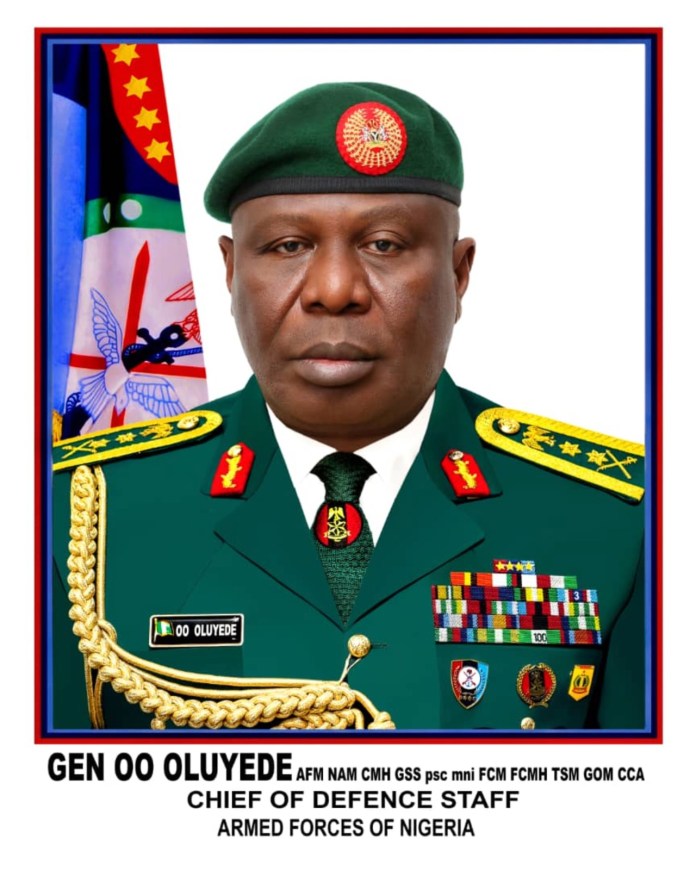
Delivering the keynote address, the Chief of Defence Staff (CDS) and Chairman of the OPSC National Steering Committee, General Olufemi Oluyede represented by the Chief of Defence Operations at DHQ, Major General Jamal Abdusalam reaffirmed Nigeria’s commitment to a whole-of-government and whole-of-society approach to peacebuilding and national recovery.
The CDS described Operation Safe Corridor as a critical pillar of Nigeria’s security architecture, noting that while kinetic operations create space for stabilisation, structured rehabilitation and reintegration help consolidate those gains and prevent the recycling of violence.
He noted that since its inception in 2016, Operation Safe Corridor has processed thousands of clients through a controlled and integrity-driven Disarmament, Rehabilitation and Reintegration (DRR) framework.
“When properly screened and coordinated, surrender pathways degrade insurgent cohesion, generate actionable intelligence and support long-term stability,” the CDS stated.
Earlier in his welcome address, the Coordinator of Operation Safe Corridor, Brigadier General Y. Ali, expressed appreciation to the CDS for his leadership and institutional support. He noted that the progress and expansion of OPSC are anchored on the CDS philosophy of enhanced jointness, improved welfare and sound administration under a whole-of-government framework.
Brigadier General Ali described OPSC as a multi-agency humanitarian stabilisation programme backed by the Constitution of Nigeria and relevant international humanitarian and human rights instruments, drawing personnel from 17 Services, Ministries, Departments and Agencies (MDAs).
He explained that the programme has continued to evolve institutionally by strengthening screening mechanisms, refining ideological disengagement modules, improving psychosocial recovery systems and expanding inter-agency coordination.
According to him, OPSC remains structured and integrity-protected, with emphasis on accountability, behavioural change and sustainable reintegration outcomes.
Providing operational updates, the Coordinator disclosed that 117 clients from Borno State have successfully completed the DRR process at Mallam Sidi Camp, reflecting strengthened federal, state harmonisation in reception, monitoring and community reintegration.
He also highlighted the expansion of OPSC to the North-West, where a DRR camp established in February last year marked a significant stabilisation milestone. Ongoing engagements with Zamfara State, he said, are aimed at recalibrating the facility toward a comprehensive Victim Healing, Rehabilitation and Reintegration framework integrating psychosocial recovery, community reconciliation, livelihood support and structured monitoring.
In the North-Central region, Brigadier General Ali revealed that Benue State has formally requested the establishment of a DRR camp. He added that Defence Headquarters has assessed proposed sites and advised alignment with national infrastructure, security and sustainability standards before approval.
He explained that the stakeholders’ meeting is expected to clarify the roles of state authorities and MDAs, identify structured resettlement support frameworks, determine modalities for community sensitisation and camp visitation, and ratify graduation timelines for rehabilitated clients.
The engagement featured updates on de-radicalisation, rehabilitation and reintegration camp activities, participant briefs, presentation of souvenirs and group photographs, reinforcing Nigeria’s commitment to consolidating security gains through coordinated rehabilitation and reintegration efforts.
 admin
admin