By Bavoriat Clara
The President of the Senate, His Excellency Senator Godswill Akpabio, has emphasised the need for deeper integration of multi-source intelligence and cutting-edge technology to strengthen Nigeria’s national security architecture.
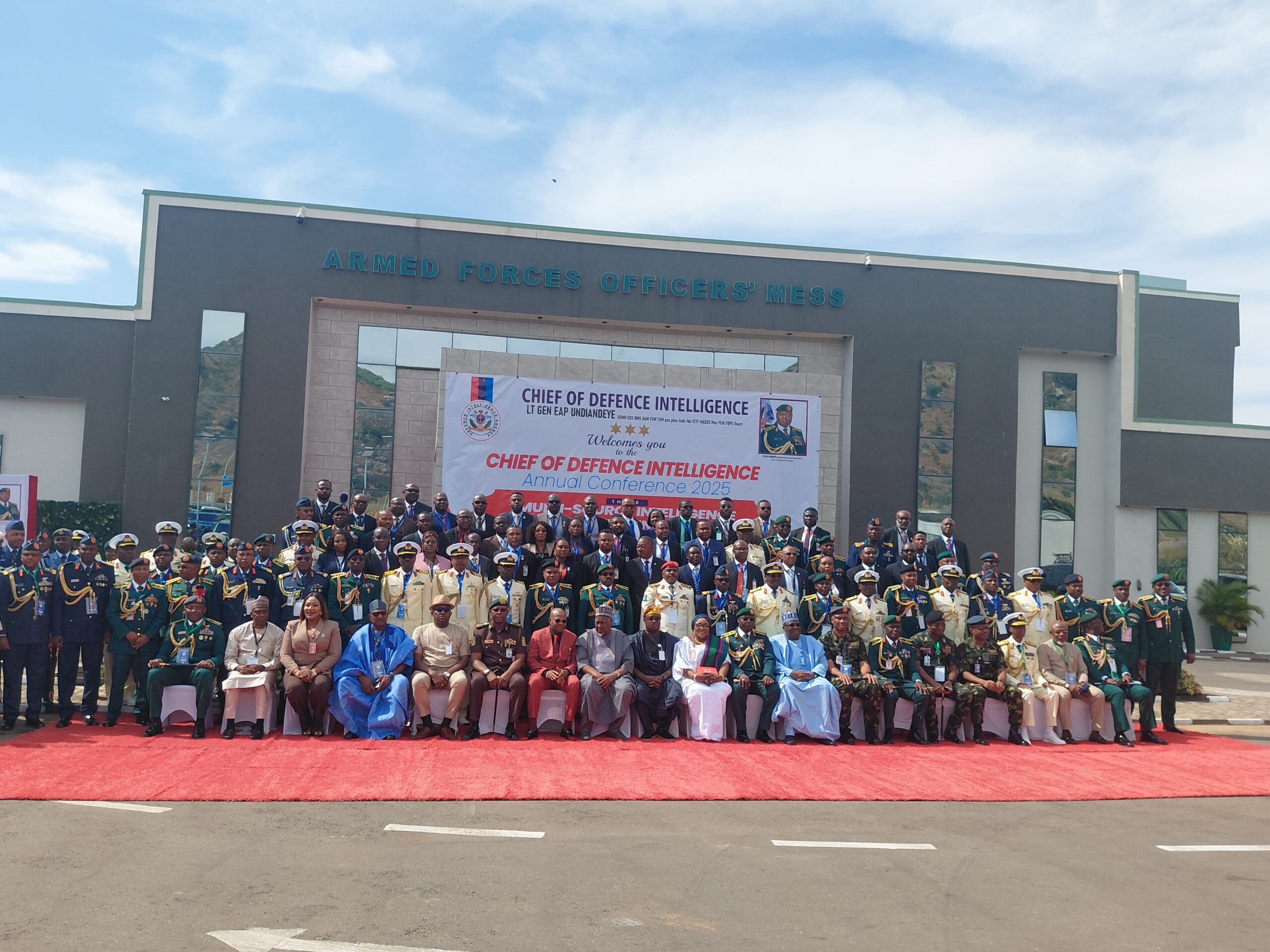
Senator Akpabio, who was represented by the Chairman of the Senate Committee on Defence, Senator Ahmad Lawan, made the call on Monday 24th November in Abuja at the opening of the 2025 Chief of Defence Intelligence (CDI) Annual Conference.
He described the conference theme, “The Role of Multi-Source Intelligence Innovation in National Security,” as timely, noting that modern security institutions across the world now rely on fused intelligence systems, including human, signals, cyber, open-source and geospatial intelligence to anticipate and neutralise threats.
Senator Akpabio, commended the Defence Intelligence Agency (DIA) for its progress in data integration, inter-agency collaboration and technology-driven transformation. He further urged Defence Attachés and State Intelligence Coordinators to intensify international and domestic partnerships, stressing that real-time information sharing and advanced analytics remain essential for strengthening Nigeria’s security framework.
The Minister of Defence, Mohammed Badaru Abubakar, also addressed participants, highlighting the increasingly complex security environment where adversaries exploit digital platforms, communication networks and emerging technologies. He underscored the need for seamless intelligence integration to ensure timely data flow between the DIA, the Services and operational theatres. The minister commended the Agency’s deployment of the Joint Intelligence Mission Data and Analytics System (JIMDAS), cognitive analytics and cyber-monitoring tools, describing them as force multipliers that enhance operational effectiveness.
The Minister of Defence further reaffirmed that while technology is vital, it cannot replace skilled intelligence personnel, adding that the Ministry remains committed to capacity building, interagency cooperation and stronger regional partnerships.
Earlier in his opening remarks, the Chief of Defence Intelligence, Lieutenant General Emmanuel Undiandeye, reiterated the DIA’s commitment to advancing multi-source intelligence integration in response to evolving threats such as terrorism, insurgency, banditry, cybercrime and misinformation. He announced the establishment of the Defence Intelligence Agency Technology Centre (DIATC), which will focus on cyber security, artificial intelligence, machine learning, robotics and data analytics.
According to him, the centre will significantly enhance intelligence gathering, enable deep and dark web exploitation of criminal networks and provide real-time analytical support to security agencies. He highlighted ongoing reforms in digitising intelligence processes, expanding cyber capabilities and boosting interagency coordination through specialised task groups.
Lt.-Gen. Undiandeye added that improved intelligence coordination has already contributed to degrading several hostile groups but stressed the need for continued innovation to stay ahead of emerging threats. He paid tribute to fallen military and security personnel, describing their sacrifice as the foundation of Nigeria’s peace and sovereignty.
The 2025 Chief of Defence Intelligence Conference continues with technical sessions involving Defence Attachés, State Intelligence Coordinators and security experts, expected to shape new strategies for strengthening national and regional security architecture.
 admin
admin