By Ruth Dabo
For years, banditry, kidnapping and violent attacks have posed serious security challenges across parts of the North Central region, particularly in Benue, Nasarawa and Taraba states, disrupting livelihoods, displacing communities and threatening regional stability.
In response, the Nigerian Army intensified counter-criminal operations under the Joint Task Force, Operation Whirl Stroke (OPWS), to dismantle criminal networks and restore peace in affected areas.
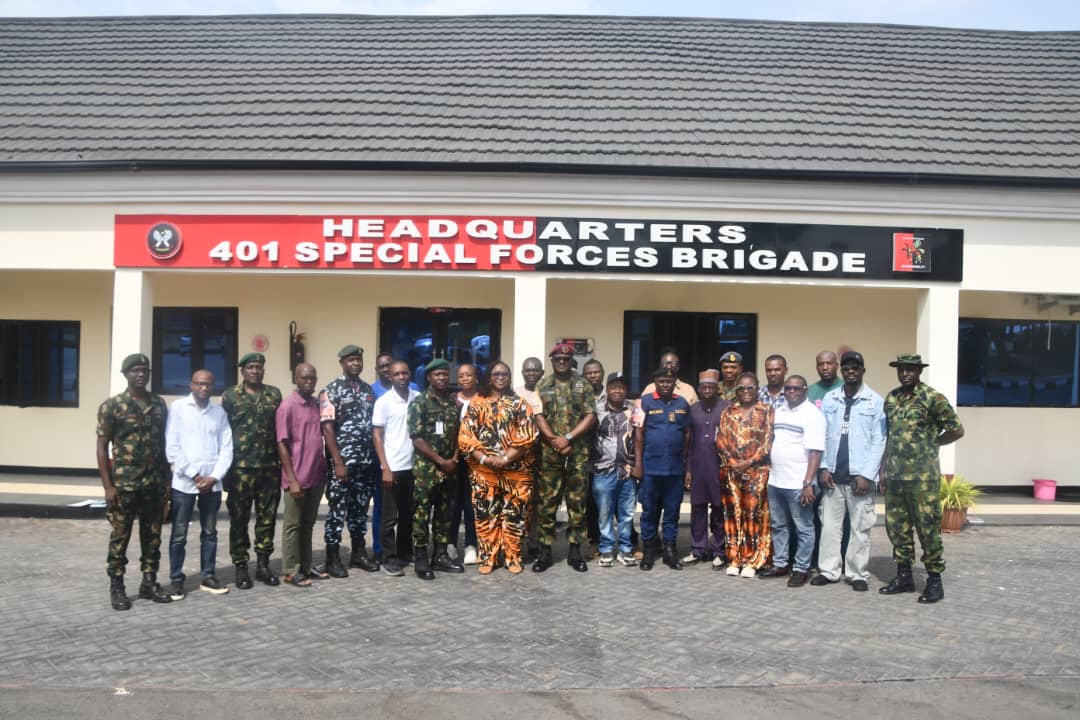
The Joint Task Force, Operation Whirl Stroke (OPWS), says it has recorded significant security successes across the region following sustained military operations against banditry, kidnapping and other violent crimes. The achievements were disclosed by the Force Commander, Operation Whirl Stroke, Major General Moses Gara, who was represented by the Commander, 401 Special Forces Brigade and Sector 1 OPWS, Brigadier General Kolawole Oyebanji Bukoye, while hosting defence correspondents on an operational media tour in Makurdi.
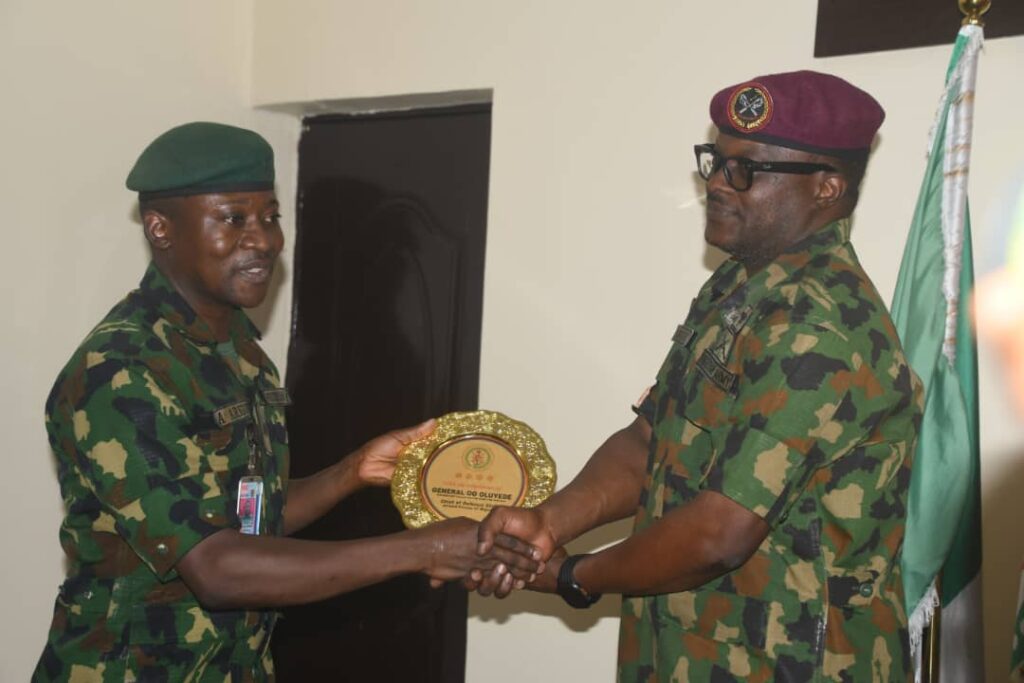
Brigadier General Bukoye said troops have rescued a total of 657 kidnapped victims and neutralised 124 bandits, armed herders and other criminal elements from January 2025 to date. He added that the operations also led to the arrest of 38 suspected gunrunners, the dismantling of several illegal gun-fabricating workshops, and the recovery of 98 assorted weapons alongside more than 6,300 rounds of ammunition.
The Force Commander further disclosed that 2,465 rustled cows were recovered and returned to their rightful owners, while troops also rescued an Israeli national working with SCC Nigeria Limited who was abducted along the Kufai–Ahmadu–Wukari road in Takum Local Government Area of Taraba State. Illicit drugs suspected to be cannabis sativa were also seized during the operations.
On the humanitarian front, the Force Commander said the improved security situation has enabled more than 60,000 internally displaced persons to return to their ancestral homes and farmlands, particularly in Benue State. He added that as part of civil-military cooperation efforts, 2,800 bags of 50-kilogram fertiliser were distributed to farmers to boost agricultural production, restore livelihoods and strengthen trust between troops and host communities.
Responding to questions from journalists, Brigadier General Bukoye dismissed allegations of troop brutality, stressing that all military operations are conducted professionally and in strict adherence to the rules of engagement and due process. He explained that suspects are properly investigated and either released if found innocent or handed over to relevant authorities for prosecution.
He assured residents that security has greatly improved, especially in Yelwata and surrounding communities, and urged the public to disregard negative narratives while supporting security agencies with timely and credible information.
In a related briefing, the Commanding Officer, Chief of Army Staff Intervention Battalion, Lieutenant Colonel Donatus Otobo, said sustained military operations by his unit have significantly improved security across Guma Local Government Area of Benue State, previously regarded as a major hotspot of violent attacks.
Speaking at the battalion’s headquarters in Tachiu, Lugume area of Makurdi, he said the battalion was deployed to the area following persistent bandit attacks and growing insecurity.
Lieutenant Colonel Otobo explained that aggressive operations, including day and night patrols and well-coordinated ambushes, enabled the battalion to dominate its area of responsibility and dislodge criminal elements. He said the operations were later expanded to cover the entire Guma Local Government Area, including Yelwata community, which had previously recorded frequent violent incidents.
He disclosed that the battalion has achieved about eighty per cent security within its area of responsibility, with attacks drastically reduced from near-weekly occurrences to periods of up to three months without incidents.
According to him, the gains were made possible through the commitment of officers and soldiers, strong intelligence support from host communities, sustained backing from the Chief of Army Staff, and improved freedom of movement that has allowed residents to resume farming, trading and other normal daily activities.
 admin
admin